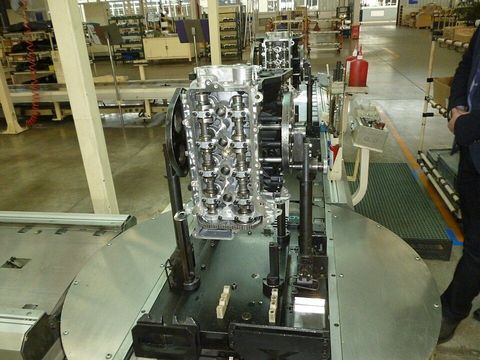
I’ve lost count of how many VPs of Operations sign off on a $700k turnkey cartoner to solve a third-shift absenteeism problem, only to realize they just traded a labor headache for an engineering nightmare. Dropping a massive check doesn't fix SKU volatility. If you ignore your raw material tolerances, full automation will absolutely tank your OEE.
When Semi-Automatic is the Only Answer
If your production schedule requires changing SKUs three or four times a shift, buying a fully automated line is a terrible investment. You need semi-automatic workcells. Yes, a guy manually feeding bottles is slower than a robot. But when your packaging supplier sends a bad batch of warped cardboard, a robot will fault out and stop the line every two minutes. A human operator just bends the bad cardboard into shape and keeps working. You can't program that kind of common sense.
Fully automated monoblock fillers do not have that adaptability. They demand absolute uniformity. If the Nordson hot-melt unit setting drifts by 15 degrees, or if warehouse humidity makes case blanks slightly stiffer, a high-speed case erector will jam constantly. You aren't eliminating labor. You are just replacing $18/hour manual labor with a $45/hour automation technician and incredibly strict QA processes for incoming materials.
There is also the integration nightmare. When a plant decides to go fully automated, procurement usually buys the filler from Germany, the cartoner from Italy, and the palletizer from a domestic builder in the Midwest. Getting a B&R controller to talk seamlessly with a Rockwell PLC via Ethernet/IP sounds simple in a vendor meeting. On the floor, it takes an integrator three weeks of programming to stop the machines from faulting each other out. If the filler starves because the downstream cartoner threw a generic 'Zone 3 Error,' your entire line sits dead while a tech tries to bridge the communication gap between two proprietary operating systems.
Surviving Washdown: Packaging for Food and Pharma
When you move into food, beverage, or pharmaceutical packaging, the biggest threat to equipment lifespan isn't mechanical wear. It's the sanitation crew. If you are building a washdown line, you need to watch out for specific vulnerabilities:
- True IP69K Ratings: Sanitation shifts don't care about your warranty. When third shift attacks a conveyor bed with 1,200 PSI hot caustic rinse, water will find every capillary path available. If an OEM tries to save margin by using an IP66 terminal box with a silicone gasket instead of true IP69K stainless enclosures, you'll be swapping fried drives within ninety days. Specify 304 stainless as your bare minimum—and don't let procurement value-engineer painted carbon steel brackets back into the bill of materials.
- Tool-Less Allergen Changeovers: Food safety audits will shut you down over cross-contamination. If you share a line between peanut and non-peanut products, you need machinery that can be stripped bare by hand. The second a maintenance guy has to go find a toolbox to dismantle a filler nozzle for cleaning, you've lost the entire afternoon.
- FDA 21 CFR Part 11 Vision Checks: A camera system checking batch codes right after the labeler isn't an optional upgrade. If an operator loads the wrong label roll, the vision system catches it before the pallet reaches the loading dock, saving you from a devastating FDA audit.
- Pneumatic Exhaust and Air Hygiene: Everyone forgets about the compressed air. If you don't plumb the exhaust from your Festo or SMC valve manifolds entirely out of the clean zone, those valves will spray a microscopic mist of compressor oil and condensation directly over your open food containers every single time a cylinder fires. And if your compressor room isn't aggressively drying that air in the first place, water just sits inside the airlines, quietly rotting the pneumatic seals from the inside out.
Why Conveyors Are Your Real Bottleneck
Management obsesses over flashy multi-axis robots, but the downtime logs usually point straight to secondary transport. Conveyors take a beating. Check these specific failure points:
- Dirty Photo-Eyes: Airborne dust in a dry-goods facility coats sensor lenses. The PLC thinks a box is blocking the line and stops the machinery. Mandating a daily microfiber wipe-down for every photo-eye eliminates half of these phantom stops.
- Washed-Out Bearings: Cleaning crews blast water past rubber seals, destroying lubrication. Train operators to wash around sensitive areas, and make sure maintenance purges those bearings with fresh food-grade grease immediately after sanitation.
Belt tension is another silent killer. If you run modular plastic belting and see fine plastic dust accumulating on the floor, the belt is grinding against the UHMW wear strips. Adjust the catenary sag at the drive sprocket now, or replace a three-thousand-dollar belt next month.
Then there are the VFDs (Variable Frequency Drives). A conveyor system is only as reliable as the drives controlling it. Mounting VFDs directly on the conveyor frame saves wiring costs upfront, but in a washdown environment, it’s a death sentence for the electronics. Pull the VFDs back into a centralized, climate-controlled MCC (Motor Control Center) room. It costs more in copper conduit during the install, but you won't be replacing water-logged drives at 3 AM.
The Shift Toward Smart Packaging
Cobots get endless marketing hype right now, but let’s be honest: in an 80-case-per-minute frozen food facility, a collaborative robot is painfully slow. They max out at a 10 to 20 kg payload limit, and safety protocols mean their cycle times can't compete with a dedicated gantry system. However, for end-of-line palletizing in cramped facilities where you physically cannot fit the safety fencing required for an industrial arm, they are the only viable retrofit.
What the cobot manufacturers rarely advertise is the complexity of the End-of-Arm Tooling (EOAT). The robot arm is just a stupid delivery mechanism; the gripper does the actual work. If you are picking up porous recycled cardboard, standard vacuum cups will lose suction and drop boxes. If you use a mechanical clamp, you risk crushing delicate secondary packaging. I’ve seen companies spend $40,000 on a bare cobot arm, only to burn another $30,000 in custom engineering fees just to get a pneumatic gripper that actually holds onto their specific box design without dropping it when the arm swings.
A line rated at 400 units a minute that actually runs consistently beats a 600-unit-a-minute line that jams every hour over cardboard variations. Standardize your plant on one control architecture—whether that's Rockwell ControlLogix or Siemens S7-1500. Verify your corrugated tolerances with your packaging supplier before signing the PO, and make absolutely sure your graveyard shift can actually navigate the HMI to troubleshoot faults without calling an external integrator.