Obstacle Avoidance in Robots: Systems, Sensors, Navigation and AI Techniques Explained
Out there beyond factory walls, robots now walk sidewalks, roll down streets, move quietly inside homes. These days you’ll find them driving themselves, carrying packages, turning lights on when it gets dark. What keeps them from bumping into things? A key skill - figuring out where obstacles are before they get too close. That trick lets them keep going without stopping, again and again.
What Is Robot Obstacle Avoidance?
Robot obstacle avoidance refers to the ability of an autonomous machine to identify obstacles in its environment and modify its path to prevent collisions. The system continuously gathers environmental data, processes that information, and makes navigation decisions without requiring constant human intervention.
Obstacle avoidance enables robots to:
- Detect nearby objects and barriers
- Navigate dynamic environments safely
- Avoid collisions with people and equipment
- Improve operational efficiency
- Support autonomous movement
This capability is fundamental for mobile robots, autonomous vehicles, drones, warehouse automation systems, and service robots.
Why Obstacle Avoidance Is Important
Modern robots often operate in environments that constantly change. People move unexpectedly, equipment shifts locations, and new obstacles can appear at any time.
Effective obstacle avoidance helps:
Improve Safety
Robots can avoid collisions with workers, equipment, vehicles, and infrastructure.
Increase Efficiency
Machines maintain smooth movement without frequent interruptions or manual corrections.
Reduce Operational Risks
Collision prevention minimizes equipment damage and reduces downtime.
Enable Autonomous Operation
Robots can perform tasks independently without continuous supervision.
Key Components of Obstacle Avoidance Systems
Successful obstacle avoidance relies on several integrated technologies working together.
Sensor Systems
Sensors collect information about the robot's surroundings and detect objects in its path.
Processing Units
Processors analyze sensor data and calculate the safest navigation decisions.
Control Systems
Control systems execute movement commands by adjusting steering, speed, and direction.
Software Algorithms
Navigation algorithms determine the most efficient path while avoiding potential hazards.
Types of Sensors Used in Obstacle Avoidance
Different environments require different sensing technologies. Most advanced robots combine multiple sensors for greater accuracy.
Ultrasonic Sensors
Ultrasonic sensors use sound waves to measure the distance between the robot and nearby objects.
Advantages:
- Cost-effective
- Reliable for short-range detection
- Common in indoor robots
Infrared Sensors
Infrared sensors detect obstacles using reflected light signals.
Advantages:
- Fast response times
- Suitable for close-range detection
- Frequently used in line-following robots
LiDAR Sensors
LiDAR (Light Detection and Ranging) uses laser pulses to generate detailed maps of the environment.
Advantages:
- High accuracy
- Long-range detection
- Widely used in autonomous vehicles
Vision Cameras
Camera-based systems allow robots to visually interpret their surroundings.
Capabilities:
- Object recognition
- Human detection
- Environmental mapping
- Advanced navigation
Touch Sensors
Touch sensors provide physical contact feedback when a robot encounters an object.
Applications:
- Emergency stopping
- Backup collision protection
- Safety monitoring
Navigation Methods Used by Robots
Obstacle avoidance relies on intelligent navigation strategies that guide movement through complex environments.
Reactive Navigation
Reactive systems respond immediately when obstacles appear.
Benefits:
- Fast decision-making
- Simple implementation
- Suitable for basic robots
Path Planning
Path planning systems calculate optimal routes before movement begins.
Benefits:
- Improved efficiency
- Reduced travel time
- Better obstacle prediction
Simultaneous Localization and Mapping (SLAM)
SLAM enables robots to create maps while simultaneously tracking their location.
Applications:
- Autonomous mobile robots
- Self-driving vehicles
- Warehouse robotics
- Service robots
Artificial Intelligence in Obstacle Avoidance
Artificial intelligence has significantly improved robotic navigation capabilities.
Machine Learning
Machine learning allows robots to improve performance by learning from experience.
Advantages:
- Pattern recognition
- Improved navigation accuracy
- Better decision-making
Computer Vision
Computer vision helps robots interpret visual information from cameras.
Capabilities:
- Object detection
- Facial recognition
- Motion tracking
- Scene analysis
Deep Learning
Deep learning models process large datasets to improve obstacle detection and navigation accuracy.
Applications:
- Autonomous driving
- Advanced robotics
- Intelligent automation systems
Industrial Applications of Obstacle Avoidance
Obstacle avoidance technology supports numerous industries.
Autonomous Vehicles
Self-driving vehicles use advanced sensor systems and AI algorithms to detect:
- Pedestrians
- Other vehicles
- Road signs
- Traffic conditions
Warehouse Automation
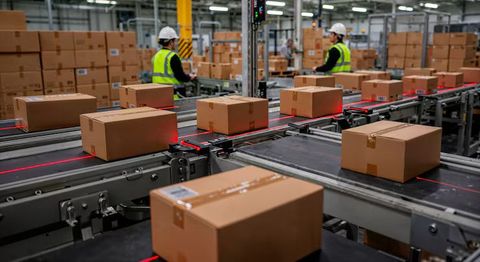
Autonomous mobile robots navigate busy warehouse environments while transporting goods safely.
Home Robotics
Robot vacuum cleaners use obstacle avoidance to clean efficiently without colliding with furniture.
Drone Technology
Drones avoid:
- Trees
- Buildings
- Power lines
- Other aerial obstacles
Manufacturing Automation
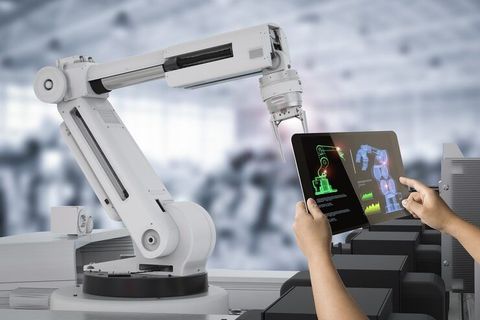
Industrial robots safely operate alongside workers while maintaining productivity and workplace safety.
Challenges in Robot Obstacle Avoidance
Despite significant advances, obstacle avoidance systems still face challenges.
Sensor Limitations
Certain sensors struggle in difficult lighting conditions or harsh environments.
Transparent Objects
Glass surfaces and reflective materials remain difficult for some detection systems.
Processing Delays
Complex environments require significant computational power for real-time decision-making.
Unpredictable Human Behavior
Human movement can be difficult to predict accurately in dynamic environments.
Emerging Trends in Obstacle Avoidance Technology
The future of robotic navigation continues to evolve through new innovations.
Advanced Sensor Fusion
Combining multiple sensor types improves environmental awareness and navigation accuracy.
Edge Computing
Faster processing allows robots to make decisions closer to real time.
AI-Powered Navigation
Artificial intelligence continues to improve path planning and obstacle prediction.
Enhanced Computer Vision
New vision systems provide more accurate object detection and environmental understanding.
Best Practices for Understanding Robotic Navigation
For those learning robotics, understanding obstacle avoidance begins with:
- Learning basic sensor technologies
- Studying robot navigation principles
- Exploring AI and machine learning applications
- Observing real-world autonomous systems
- Understanding mapping and localization techniques
Conclusion
Obstacle avoidance is one of the most important technologies enabling autonomous robotics. Through the integration of sensors, artificial intelligence, computer vision, and advanced navigation systems, robots can safely operate in complex environments while minimizing risks and improving efficiency.
As robotics technology continues to advance, obstacle avoidance systems will become more intelligent, more accurate, and more adaptable. From self-driving vehicles and warehouse automation to drones and smart service robots, these technologies will remain essential to the future of autonomous systems and industrial automation.

Related Post...