That is the entire point of a modern SCADA-integrated sensor grid. It does not just passively monitor the environment; it acts as an automated kill switch to protect the plant's balance sheet.
The old way of handling compliance was entirely reactive—the classic "grab sample." A guy from maintenance takes a plastic bottle down to the outfall, fills it up, and puts it on ice for a courier. A week goes by before a PDF report finally shows up. If you failed the test, congratulations—you've unknowingly been dumping illegal effluent for seven straight days. That kind of latency doesn't fly anymore. The CPCB (Central Pollution Control Board) and state boards like the GPCB are well aware that real-time monitoring tech is cheap and available. That’s exactly why OCEMS (Online Continuous Emission/Effluent Monitoring Systems) guidelines are becoming mandatory in operating permits.
The problem? Buying the actual hardware is an absolute mess.
The Physics That Actually Matter
Forget the polished vendor brochures. When deployed in hostile industrial environments, environmental monitoring systems are brutal mechanical compromises. You are dealing with field engineering realities, not sterile lab conditions.
- Air Particulate Sensors (Optical Particle Counters): Devices like Alphasense units use internal lasers to count suspended dust. Sure, they work flawlessly in dry weather. But once the monsoon hits and humidity spikes past 95%, unheated inlets trap condensation inside the optical chamber. The photodiode gets confused by the water droplets, throws a dummy reading of 200+ PM, and suddenly alarms are blaring for absolutely no reason. Your baseline data is completely trashed.
- Gas Sensors (PID and Electrochemical Cells): You don't have much choice but to use these for tracking VOCs like benzene or toxic ammonia leaks. Just understand that their internal chemical membranes immediately begin degrading the second they are exposed to heavy industrial heat or corrosive vapor. Then you have to deal with cross-sensitivity. Your CO sensor might throw a massive spike just because a diesel forklift idled near the intake, not because a boiler actually failed. Without aggressive recalibration schedules, you aren't collecting data—you're collecting noise.
- CEMS (Continuous Emission Monitoring Systems): If you are running a heavy boiler, incinerator, or kiln, you aren't just slapping a $500 IoT gadget on an exhaust stack. You are building a CEMS shelter. You need sample conditioning—chilling the exhaust gas to drop out moisture before it hits the delicate analyzer. This is a $150,000 analytical shack that requires daily calibration using certified gas cylinders.
- Telemetry (OT vs. IT): Low-power telemetry like LoRaWAN has eliminated the need to trench hundreds of meters of expensive copper conduit across a 40-acre tank farm. A sensor node running on a lithium thionyl chloride pack can broadcast across five miles for two years without a battery swap. But integration is a battleground. Operational Technology (OT) teams want everything hardwired via Modbus RTU directly to a local PLC for security. IT teams want Wi-Fi sending MQTT payloads to cloud servers. Bridging that gap is where most projects stall.
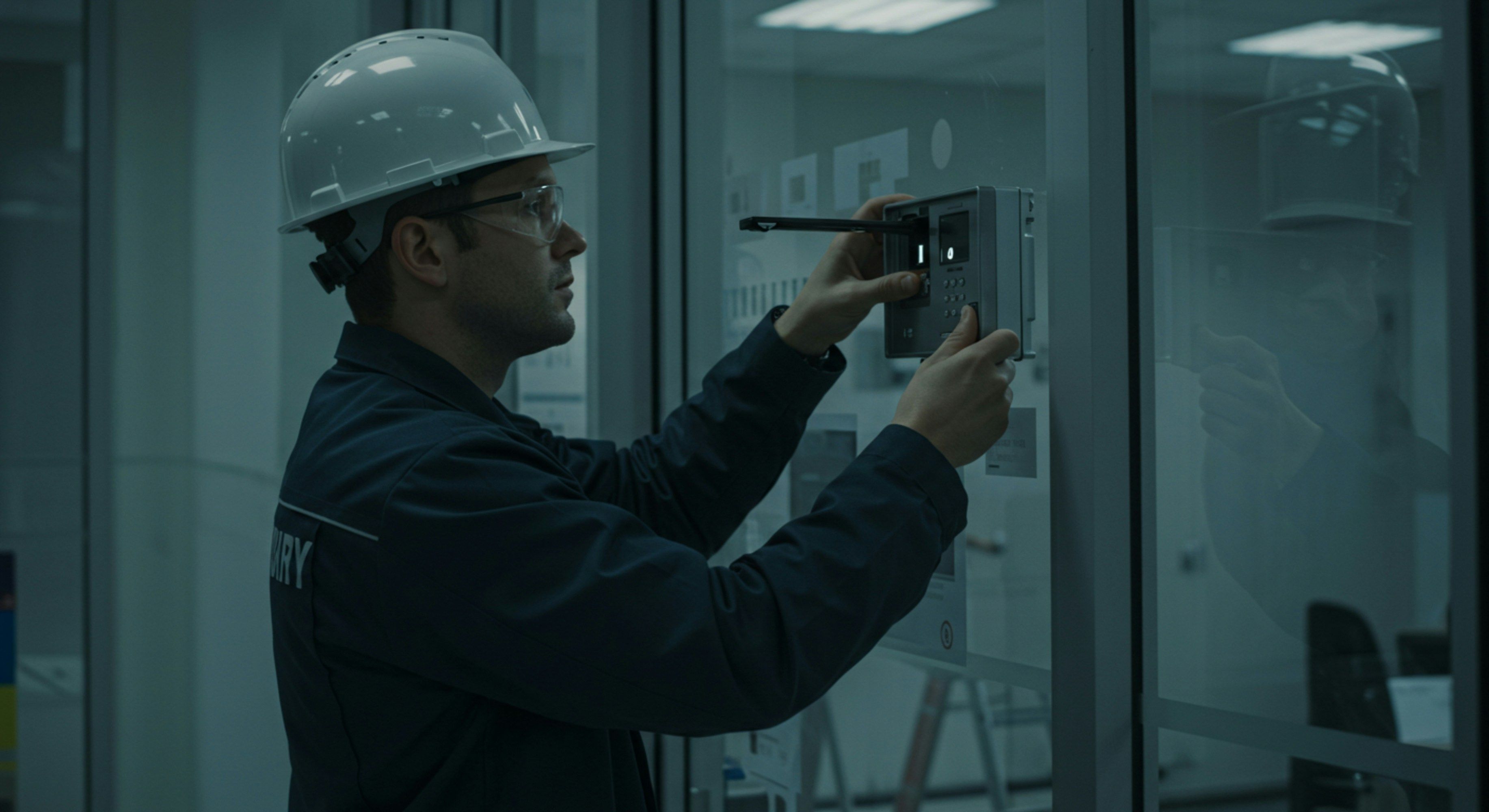
What Does This Actually Cost? (Understanding the TCO Trap)
It's tempting to focus entirely on the initial hardware price when evaluating a sensor, but that's a classic rookie mistake. In industrial settings, securing the initial capital expenditure (CapEx) is often the simplest hurdle to clear with management. The real threat to your project's survival is the ongoing operating expenditure (OpEx)—the hidden costs that slowly bleed the budget dry.
A vendor might quote you $2,000 for a multi-gas perimeter monitor and act like it's a steal. What they leave out is that the PID lamp burns out and costs $300 to replace every single year. Or that the tiny internal sampling pump will inevitably seize up after 10,000 hours of continuous running. Oh, and those calibration gas cylinders you need? They expire, and replacing them runs about $800 a pop.
A base sensor might cost $500 upfront, but mandatory field calibration, membrane replacements, and technician visits will easily run a $1,200 annual maintenance cost per node. If you don't budget for a dedicated instrumentation technician (or an expensive service contract), your $100,000 grid will be generating nothing but random number generator noise within 18 months.
| Hardware Tier | Typical Setup | Initial Cost (Per Node) | Hidden TCO Factors | Real-World Application |
|---|---|---|---|---|
| Commercial Semi-Rugged | Optical PM2.5 counters, RS-485 Modbus, cellular modem | $800 – $2,500 | Regular filter changes, SIM card data fees, frequent cleaning of optical chambers. | Urban air quality mapping, commercial greenhouse climate loops. |
| Class 1, Div 2 Certified | Explosion-proof enclosures, heated inlets, auto-calibrating telemetry grids | $8,000 – $25,000+ | Requires certified technicians for quarterly drift calibration and ATEX-rated/PESO-certified part replacements. | Petrochemical refineries, municipal wastewater treatment, heavy metallurgical manufacturing. |
Where the Money Goes: Specific Industrial Applications
To understand the real value, you have to look at where this hardware meets the process.
1. Wastewater and Effluent (The Kill Switch)
Wastewater is arguably the hardest thing to monitor. It’s corrosive, full of biological matter, and highly unpredictable. Drop a standard glass pH probe into an effluent channel, and it will be covered in algae, oil sludge, or calcium scale within days. That’s why industrial-grade setups rely on auto-cleaning pneumatic wipers or ultrasonic bursts just to keep the glass bare.
It’s all about automated control. If a sensor catches an unexpected pH drop, the local PLC intercepts that signal and instantly diverts the acidic flow into an emergency holding tank—long before it hits the municipal sewer line and triggers a devastating GPCB penalty.
2. Fence-line Fugitive Emissions
Petrochemical plants and refineries are increasingly forced to monitor what blows across their property lines. This means setting up a perimeter of PID sensors to catch fugitive VOC leaks from thousands of valves and flanges. The critical challenge here is wind data. A sudden VOC spike on the north fence line is completely useless if you don't have an integrated ultrasonic anemometer proving that the wind was actually blowing from the adjacent highway, not from your tank farm. Context is everything.
The Data Hygiene and Vendor Lock-in Nightmare
The hardest part of modern monitoring is no longer collecting the data. Any competent instrumentation engineer can drop a dozen nodes across a property and flood an AWS database with millions of CSV rows.
The nightmare is data hygiene.
When you deploy hundreds of sensors across an active industrial zone, half of your maintenance budget goes into chasing false alarms: a stray spider building a web inside a laser inlet, a weed trimmer chewing through a grounding wire, or road dust skewing a local baseline. Building an effective monitoring architecture means building software filters that can tell the difference between a catastrophic factory pipe rupture and a diesel dump truck idling too close to an intake fan.
Furthermore, the biggest trap in modern environmental monitoring is the dashboard. Hardware startups will frequently sell you the physical sensors at a massive loss, just to lock you into their proprietary cloud platform at $50 per month per node.
If their servers go down, you are flying blind. If they go bankrupt next year, your hardware becomes an expensive brick. A professional deployment demands data ownership. Any hardware you buy must be capable of pushing raw data payloads (like JSON via MQTT or Modbus TCP registers) directly into your own SCADA system, ERP, or historian. No mandatory middleman subscriptions allowed.
Regulatory Psychology: The Fear of Self-Incrimination
Here’s the elephant in the room with continuous monitoring: plant managers absolutely hate the idea of recording their own mistakes.
If you monitor emissions or effluent every 5 seconds, you will inevitably record minor, temporary permit violations—a five-minute spike in turbidity or a brief surge in SOx—that a weekly manual grab sample would have entirely missed. There is a deep-seated fear that pushing this high-resolution live data directly to the CPCB/GPCB servers is essentially self-incrimination.
However, the legal reality is shifting. The pollution control boards are increasingly viewing the absence of continuous OCEMS data as guilt by default. In a dispute over a sudden pollution event in a shared river or industrial estate, having 12 months of timestamped, tamper-proof baseline data is your strongest legal defense. The data protects the plant just as much as it polices it.
Deployment Checklist for Plant Managers
If you are planning an EMS upgrade this quarter, verify these five technical constraints before signing the vendor contract:
- Sensor Drift Protocol: How often does the specific sensor membrane need physical recalibration with certified span gas, and who is contracted to do it?
- Environmental Armor: If your PM sensors lack heated inlets, they will drown in the monsoon. Also, verify the ATEX and PESO enclosure ratings against the exact explosive zone of the mounting location.
- Data Ownership & Integration: Check if the hardware allows you to push raw Modbus TCP or MQTT payloads directly to your own SCADA. If it forces you into a proprietary cloud dashboard subscription, walk away.
- Consumables Budget: What’s the real replacement cost (and actual lifespan) of the PID lamps, electrochemical cells, and those tiny internal sampling pumps?
- Alarm Fatigue Mitigation: How is the software filtering out "noise" (like a forklift exhaust spike) from actual systemic failures? Are alarms routed through a logic gate before pinging the facility manager at 2 AM?