I've watched countless devices die in the dirt because silicon startups drastically underestimate the brutal physical reality of an Indian farm.
The Life Expectancy of a Soil Sensor
Take the classic wireless soil moisture sensor. The startup pitch is that you just push this plastic spike into the dirt, and an app on your phone will magically tell you exactly when the cotton needs watering. But farms are aggressive industrial zones. Think about how plowing actually happens. A hired tractor driver rushing to finish 10 acres before sunset isn't going to look out for a little plastic stick in the mud. By the time the farm owner remembers to dig up the ₹15,000 sensor, the rotavator has already chopped it into fifty pieces.
Even if you remember to pull the sensors out before the tractor comes, what happens when you have hired labor? A daily wage worker carrying a 20-kilo sack of urea isn't looking at the ground. I've watched a worker accidentally kick a central IoT gateway hub right off its plastic mounting peg. He didn't even notice. The startup had designed the peg for a delicate indoor greenhouse, not an open field where men in heavy boots are rushing to beat the incoming rain. And even if the tractors and workers miss them, field mice chew right through the rubber seals on the "waterproof" casings. Once moisture hits the lithium battery during the monsoon, it's dead.
The Farm Without a Network
Then there is the internet. The founders build these cloud dashboards assuming the whole world has high-speed broadband. Try getting a basic WhatsApp message to send in a cotton field just outside Dhrangadhra, let alone uploading sensor data to an AWS server. If the local Jio or Airtel tower goes down for two days—which happens all the time—the device just sits there draining its battery to zero trying to find a signal. You can't rely on a cloud server to water a plant.
When Hard Water Meets Smart Valves
Then there is the hardware itself. The startups design these systems assuming you have clean municipal tap water. A guy I know in Surendranagar dropped ₹35,000 on an automated irrigation controller last year. The idea was that smart solenoid valves would open and close on their own whenever the soil got dry. But nobody from the tech company bothered to test the local borewell water. The water out there has 2500+ TDS and so much lime that those sophisticated imported valves completely calcified and jammed open in exactly 15 days. He woke up to a flooded field and ruined roots. If the hardware can't survive corrosive, sandy, unfiltered farm water, your smart algorithm is entirely useless.
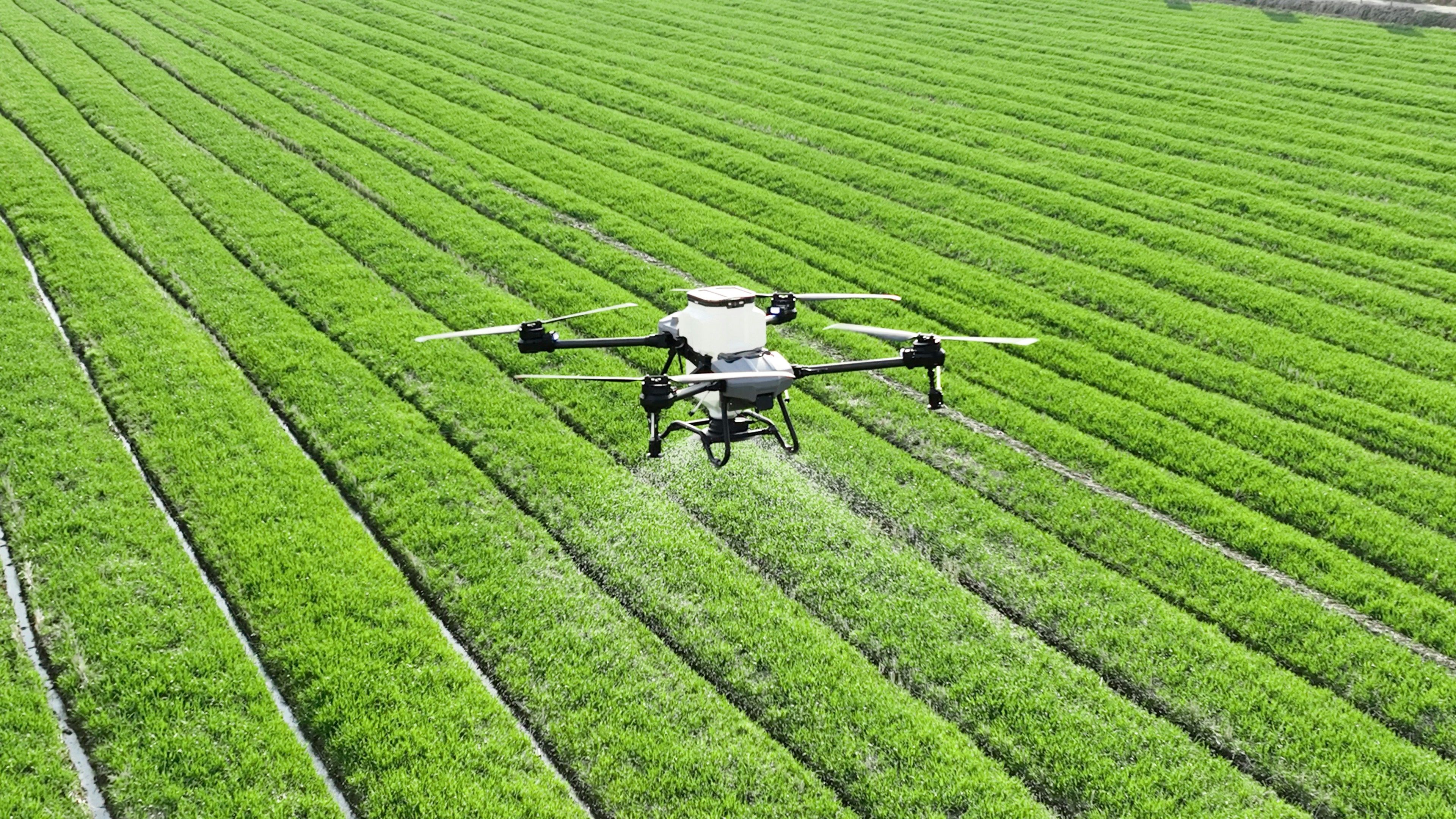
Drones vs. 43-Degree Dust Storms
Take the agricultural drones everyone is currently obsessed with. A drone carrying 10 liters of pesticide is hauling a massive amount of dead weight. In a testing facility, maybe that battery gives you 15 minutes of flight. But when you fly it in Saurashtra during May, the air temperature is already sitting at 43 degrees. The lithium battery packs get so hot they actually start to swell up. You end up having to land the drone after just 7 minutes because the battery is simply too hot to keep discharging safely. To spray a 20-acre farm, you end up needing at least six spare batteries and a heavy diesel generator sitting on a pickup truck in the mud just to keep charging them. Hauling a loud, vibrating generator across unpaved farm roads completely wipes out the convenience of the drone itself.
And don't forget the dust. Agricultural drones have exposed high-rpm motors. When you take off from a dry, unpaved farm track in Saurashtra, the drone kicks up a localized sandstorm. Within a week of operation, the fine, abrasive dust gets straight into the motor bearings. You start hearing a grinding noise, the motor overheats, and suddenly your ₹4 lakh drone drops like a stone into a field of tall castor plants.
Solving the Real Problems
The fundamental issue is that startups build tech for things farmers already know. Any guy who has spent twenty years growing cotton already knows exactly when his field is thirsty. The things that actually ruin his day have nothing to do with soil data. He doesn't know if a swarm of pink bollworms is going to hit his specific village next Tuesday. He doesn't know how to track his labor. When you have 30 daily wagers picking cotton during harvest, just figuring out who showed up in the morning and who vanished after lunch is a massive headache. A simple, rugged biometric thumb scanner that works completely offline and texts the daily attendance to the owner would save hours of arguments. But nobody wants to build that because a thumb scanner isn't "AI-driven."
The Technology That Actually Works
Ironically, the automation that actually works on these farms is rarely called "smart tech". In many states, farmers get electricity at odd hours, often at night. Instead of walking two kilometers in pitch darkness risking snakebites to flip a heavy three-phase switch, farmers use a ₹2,500 local "auto switch"—like a Shakti or Kishan brand starter with a basic SIM card soldered inside. There is no app needed. The farmer just drops a missed call from his bed, and the motor starts. If a phase drops or the power trips, the box sends a text message straight to his phone in Gujarati. It has no cloud dashboard, no AI, and operates purely on missed calls and SMS. Farmers buy them by the thousands because they solve an immediate pain point and they rarely break.
A lot of ag-tech companies tried to replace these local starters with their own "smart" versions featuring sleek touchscreen interfaces and WiFi. They failed miserably. You simply can't operate a glass screen when your hands are slick with engine oil and wet soil. The guys who build the local Shakti boxes know this. They skip the glass and use cheap, thick plastic buttons. If the button gets jammed with mud, the farmer just whacks it with the handle of a screwdriver to make it work.
The Right to Repair in a Village
And when things do break, maintenance is the ultimate dealbreaker. Startups treat hardware like software. If an app breaks, you push an update. But when an IoT gateway throws a motherboard error in a village, the local mechanic who repairs diesel tractors can't help. A three-day wait for a technician from the city means you lose the crop. Hardware must be modular enough that a farmer can yank out a broken part and plug in a replacement bought from the local supply store.
Until the engineers building these products sit in a field at 45 degrees for two days themselves, they'll never understand why a farmer uninstalls their fancy app on day one.